Biography
About Shirin Ebadi
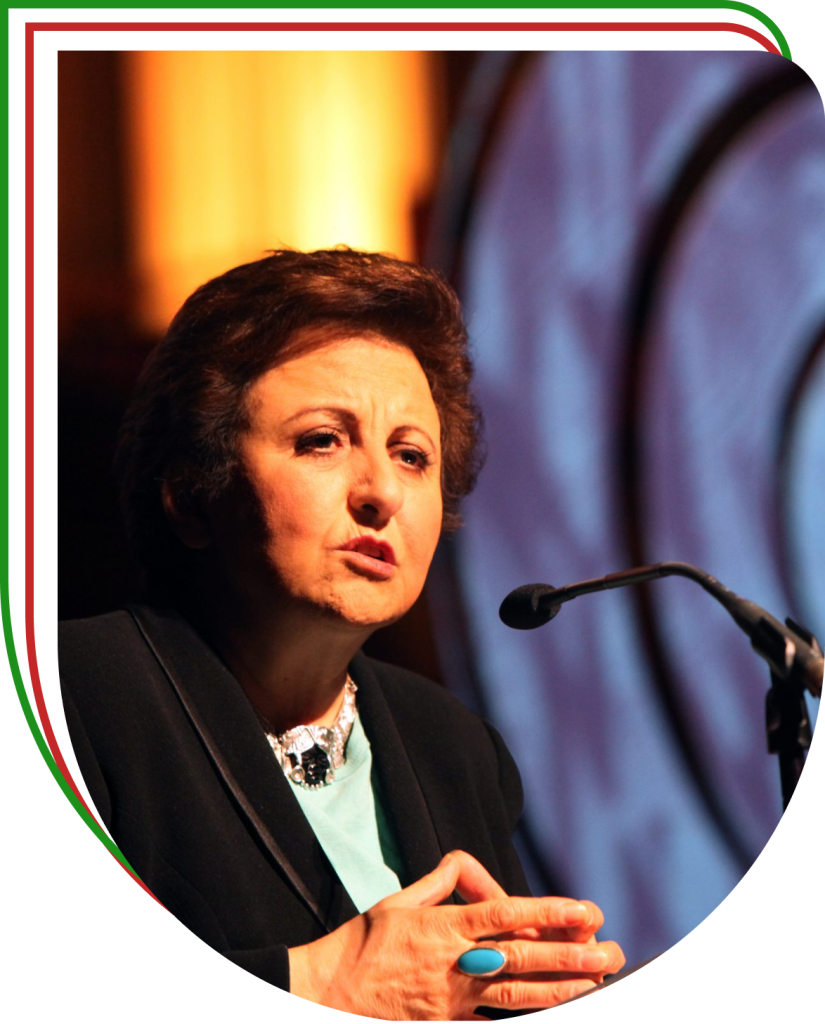
Shirin Ebadi was born on 22 June 1947 in Hamedan, Iran, into an educated and culturally engaged family. She is a jurist, former judge, attorney, university lecturer, author, and prominent human rights advocate, and is among the founders of the Defenders of Human Rights Center, the Society for Protecting the Rights of the Child, and the Shirin Ebadi Foundation. Ebadi was the first Iranian woman and the first Muslim woman in the world to receive the Nobel Peace Prize. She was also the first woman in the history of Iran’s judiciary to become president of a court, a position from which she was removed following the 1979 Revolution.
Parents and Family
Her father, Mohammad Ali Ebadi, was a professor of commercial law, the author of the book Commercial Law, and head of the Hamedan Registry Office. He was also known for his liberal political views and criticism in the aftermath of the 1953 coup d’état. Following the removal of Prime Minister Mohammad Mosaddegh, he was dismissed from his government post for a period. He died in April 1991.
Her mother, Minou Yamini, was a homemaker who devoted much of her time to raising the family’s four children—three daughters and one son. According to Ebadi, there was no discrimination between girls and boys within the family.
When Ebadi was still an infant, her family moved from Hamedan to Tehran. She attended Giv Primary School and later continued her secondary education at Anoushirvan Dadgar and Reza Shah Kabir schools in Tehran.
Personal Life and Family
Ebadi married during the early years of her judicial career. Her husband, Javad Tavassolian, was an electrical engineer. They had two daughters, Negar and Narges.
Negar was born in 1980. She pursued her studies at Sharif University of Technology in Tehran, McGill University in Canada, and the University of Georgia in the United States, completing her education at doctoral level. She currently lives in California and works in the technology industry.
Narges was born in 1982. She studied law at Shahid Beheshti University in Tehran, followed by further studies at McGill University in Canada and SOAS University of London, where she completed her doctoral studies. She is now a reporter and journalist and works for Iran International television.
In the run-up to Iran’s 2009 presidential election, Shirin Ebadi travelled to Spain to attend a conference. What had been planned as a short trip ultimately became an unplanned and involuntary departure from Iran. Following the widespread protests over the election results, and the subsequent repression and killing of protesters, she was no longer able to return to the country and decided to continue her activities from abroad.
In response, the security apparatus of the Islamic Republic detained both her husband and her sister. Javad Tavassolian was subjected to intense pressure by interrogators and was forced to make a televised confession. Some time later, the couple separated by mutual agreement.
Ebadi has lived in exile in London since the end of 2009, and the United Kingdom remains her principal place of residence.
University Education and Entry into the Judiciary
Ebadi entered the Faculty of Law at the University of Tehran in 1965 and graduated with a degree in law in 1968. After completing her undergraduate studies, she continued her education at master’s level in private law.
Following a six-month judicial traineeship and successfully passing the judicial qualification examinations, she entered Iran’s judiciary as a judge. From 1969 onwards, she advanced rapidly through the judicial ranks. In 1975, Ebadi became both the first woman and the youngest person to be appointed president of Branch 24 of the Tehran City Court.
Following the 1979 Revolution, Shirin Ebadi and other female judges were removed from their judicial positions as a result of newly imposed restrictions and discriminatory rules. After stripping Ebadi of her judicial position, the new judicial system initially reassigned her as a clerk in the same court over which she had previously presided. Female judges were later given the title of “legal expert”. Ebadi refused to accept this demotion and discrimination and chose early retirement.
After her forced retirement, and following changes to the structure of the Bar Association that placed it under the control of the judiciary, her applications for a licence to practise law were repeatedly rejected. She was finally granted her licence in 1992 and opened her own law office.
Until 2009, when she left Iran, Shirin Ebadi continued to practise as an attorney alongside her human rights work.
Dr Shirin Ebadi's
Publications


Shirin Ebadi’s political and intellectual positions are clearly expressed in her interviews, public statements, and speeches at international and academic forums. She is a staunch opponent of authoritarianism and is regarded as a prominent figure in the opposition to the Islamic Republic. In her more recent statements, particularly since the Woman, Life, Freedom uprising, she has emphasised the need for unity among the forces opposed to Iran’s ruling regime, arguing that a transition beyond the Islamic Republic is not possible without cooperation among different political currents. In response to divisions between monarchists and republicans, Ebadi has described herself as someone who puts Iran above political labels, while continuing to be invited to political meetings and events organised by both sides.
On women’s rights and the relationship between women’s freedom and democracy, Ebadi has stated that “freedom and the establishment of democracy are impossible without the freedom of women.” She regards equality between women and men as an essential condition for meaningful change in Iran.
She has also consistently emphasised equal rights for Iran’s ethnic communities. In recent years, a substantial part of the work of the Shirin Ebadi Foundation has been devoted to facilitating access to legal and educational materials for citizens who speak Turkish, Kurdish, Arabic, and Balochi.
Ebadi believes that the Islamic Republic is beyond reform, placing the absence of the rule of law and the lack of justice at the centre of this argument. In the field of human rights, she has consistently emphasised the importance of due process and fair trial guarantees, the prohibition of torture, opposition to the death penalty, and the risk of detainees disappearing while in custody. She also maintains that lesser-known prisoners deserve particular support and that their names should be spoken more loudly and more often.
Since the 1990s, Shirin Ebadi has played an active and direct role in establishing and leading civil society and human rights organisations in Iran. For a period, she also worked in publishing and founded a publishing house called “Nashr-e Kanoon”. She was eventually forced to discontinue this work after refusing to participate in corruption surrounding the allocation of state-subsidised paper. Her principal activities, however, have centred on the establishment and leadership of civil society and human rights organisations, including:
- – Founding the Society for Protecting the Rights of the Child in 1995;
- -Founding the Defenders of Human Rights Center in 2001 and serving as its president until its office in Tehran was forcibly closed;
- -Founding the Association for Mine Clearance in 2005 and serving as its president;
- -Establishing the Shirin Ebadi Foundation in 2004;
- -Joining several other women Nobel Peace Prize laureates in establishing the Nobel Women’s Initiative in 2006; other Nobel Peace Prize laureates later joined the network;
- -Carrying out joint projects with the UNICEF office in Iran on children’s rights, as well as organising free educational programmes on children’s rights, public human rights education, and women’s rights.
After obtaining her licence to practise law in 1992, Shirin Ebadi established her own private law office, with a particular focus on human rights cases. She was especially active in the fields of women’s and children’s rights and in the defence of political prisoners and prisoners of conscience.
Among the most significant cases in which she served as legal counsel were:
- -the case of Zahra Kazemi, the Iranian-Canadian journalist who was killed while in custody in Evin Prison;
- -the case of Parvaneh and Dariush Forouhar, two prominent political activists who were murdered as part of Iran’s so-called Chain Murders;
- -the case of Ezzat Ebrahim-Nejad, a student killed during the 1999 Tehran University dormitory unrest;
- -the case of Zahra Bani-Yaghoub, a young physician who died while in detention in Hamedan;
- -the defence of seven leaders of Iran’s Bahá’í community;
- -the representation of a number of independent writers and journalists, including Abbas Maroufi, Faraj Sarkouhi, and Habibollah Peyman, in cases involving the closure of publications and pressure from security agencies;
- -the case of Arian Golshani, a child who died after prolonged abuse and torture by her father and stepmother;
- -the case of Leila, a teenage girl who was the victim of gang rape and was subsequently murdered. The case prompted extensive public debate in Iran about qisas (retributive punishment) and the protection of victims of sexual violence.
Ebadi drew in particular on the final two cases to criticise Iranian laws concerning child custody, punishment, and the legal interpretation of the “best interests of the child”. Many of her other cases were likewise accompanied by considerable judicial and security pressure.
For example, following the 1999 Tehran University dormitory events and the killing of Ezzat Ebrahim-Nejad, Ebadi, with the consent of Amir Farshad Ebrahimi, recorded a video statement by Ebrahimi, a former member of Ansar-e Hezbollah, and sent it to senior state officials. In the recording, Ebrahimi described the role of certain hard-line commanders in organising attacks and acts of violence. State-affiliated media referred to the case as the “Tape-Makers Case” (Parvandeh-ye Navarsazan).
The sensitivity surrounding the case ultimately led to Ebadi’s arrest. She was held for nearly a month in solitary confinement in Evin Prison. In connection with her activities, and particularly the “Tape-Makers Case”, a court of first instance sentenced her to eighteen months’ imprisonment. The sentence was later changed on appeal and replaced with a fine. The case and her detention drew international attention to the situation of independent lawyers and human rights defenders in Iran.
Ebadi’s legal activism extended beyond courtroom representation. After the adoption of a new Islamic Penal Code that set a woman’s diyeh—financial compensation for bodily injury or death—at half that of a man, she wrote an article arguing that, under the law, the value of a woman’s diyeh was equivalent to the compensation assigned to “one of a man’s testicles.” Her explicit highlighting of this legal disparity generated considerable debate and criticism and became a widely cited example of her feminist critique of the official legal and jurisprudential framework.
- -Teaching Commercial Law at Islamic Azad University in Tehran;
- -Teaching Urban Law in the master’s and doctoral programmes in Urban Planning at the Faculty of Fine Arts, University of Tehran;
- -Teaching Women’s Rights at the Faculty of Humanities, Allameh Tabataba’i University;
- -Teaching at the University of Tucson in Arizona, United States.
Shirin Ebadi served for five years on the board of Reporters Without Borders (RSF) and has played an active role in defending press freedom and the rights of journalists at the international level.
In January 2004, while attending the World Social Forum in Mumbai, she proposed the designation of a day as an International Day of Non-Violence. The initiative was later adopted by the United Nations General Assembly in 2007, with 2 October—the birthday of Mahatma Gandhi—designated as the International Day of Non-Violence.
Ebadi was also a supporter of Iran’s Mourning Mothers movement. She called on women in other countries to show solidarity with Iranian mothers by wearing black and holding weekly gatherings in public parks.
An Honour That Came at an Immense Cost
In October 2003, Shirin Ebadi was awarded the Nobel Peace Prize “for her pioneering efforts for democracy and human rights, especially the rights of women and children,” becoming the first Muslim woman and the first Iranian to receive the Nobel Peace Prize. Ahead of the award ceremony in Oslo, she stated that she intended to attend the ceremony without wearing a headscarf.
Her return to Tehran was met with a large public reception at Mehrabad Airport, where thousands of people welcomed her while singing songs including Ey Iran and Yar-e Dabestani.
Ebadi brought the Nobel Prize money back to Iran, apart from a relatively small portion that she set aside to cover her daughters’ educational expenses. She used part of the award money to purchase and furnish an apartment, which she made available to the Defenders of Human Rights Center. Another portion was allocated to a fund established to support the families of political prisoners.
Following Ebadi’s departure from Iran in 2009, however, the Islamic Republic authorities opened a case against her on the grounds of alleged unpaid taxes, despite the fact that prizes such as the Nobel Prize are exempt from taxation under Iranian law.
In an unprecedented move, the authorities not only froze her bank accounts but also targeted her property and other assets. These included the office used by the Defenders of Human Rights Center, her private apartment, a garden property, and other assets, which were assessed and subsequently put up for sale at auction. Her bank safe-deposit box was also seized, including her Nobel Peace Prize medal and diploma.
The Nobel medal was later returned to Ebadi following strong international protests from the Norwegian Nobel Committee and the Norwegian government. The other seized items and the remainder of her property, however, were never returned. Instead, they were sold through an auction process that was highly opaque.
Shirin Ebadi has received a large number of honorary doctorates, with various sources placing the total at approximately 26. Among the honorary degrees awarded to her are:
- 2004
- -Williams College, United States
- -University of Liège, Belgium
- -Brown University, United States
- -University of British Columbia, Canada
- -University of Maryland, College Park, United States
- -University of Toronto, Canada
- -Simon Fraser University, Canada
- -Koç University, Türkiye
- -University of Akureyri, Iceland
- 2005
- -Australian Catholic University, Australia
- -University of San Francisco, United States
- -Concordia University, Canada
- -York University, Canada
- -University of York, United Kingdom
- -Jean Moulin University Lyon 3, France
- 2007
- -Loyola University Chicago, United States
- -The New School, United States
- 2008
- -University of Poitiers, France
- 2009
- -Marquette University, United States
- 2010
- -University of Genoa, Italy
- -Universidad Europea de Madrid, Spain
- 2011
- -University of Cambridge, United Kingdom
- 2012
- -SOAS University of London, United Kingdom
- 2016
- -Universidad César Vallejo, Peru
- 2018
- -University of Lleida, Spain
- 2026
- -University of Michigan, United States
Awards and Distinctions
- 1996
- -Honoured by Human Rights Watch as a human rights monitor
- 2001
- -Rafto Prize, Norway
- 2003
- -Nobel Peace Prize, October 2003
- 2004
- -International Democracy Award
- -Lawyer of the Year Award
- -James Parks Morton Interfaith Award, Interfaith Center of New York
- -Women’s eNews – 21 Leaders for the 21st Century Award, United States
- -Named among Forbes’ World’s 100 Most Powerful Women
- -Leibniz-Ring-Hannover, Presse Club Hannover, Germany
- 2005
- -Freedom Award, Germany
- -UCI Citizen Peacebuilding Award, University of California, Irvine, United States
- -Golden Plate Award, American Academy of Achievement, United States
- 2006
- -Commander of the Legion of Honour (Commandeur de la Légion d’honneur), France
- 2007
- -Honorary Citizen of San Sebastiano al Vesuvio, Italy, March 2007
- 2008
- -Toleranz-Preis, Evangelische Akademie Tutzing, Germany
- -Named one of A Different View’s 15 Champions of World Democracy
- 2009
- -Award for the Global Defence of Human Rights, International Service for Human Rights, London
- -Manhae Peace Prize, South Korea
- -Scholars at Risk Award, Dublin, Ireland
- -Roland Berger Human Dignity Award, Roland Berger Foundation, Germany
- -Human Security Award, Muslim Public Affairs Council (MPAC), United States
- 2010
- -Bonn International Democracy Award, Germany
- -Felix Ermacora Human Rights Award, Austria
- -Exodus Award, La Spezia, Italy
- -Honorary Citizen of Paris, France
- -Honorary Citizen of Genoa, Italy
- -Save the Children Award, Spain
- 2011
- -Don and Arvonne Fraser Human Rights Award, The Advocates for Human Rights, United States
- -A street in Poitiers, France, named in honour of Shirin Ebadi
- 2012
- -Avicenna Prize, Frankfurt, Germany, May 2012
- -Prize for International Understanding and Human Rights, Ulrich Zwiener Foundation, Germany, May 2012
- -Honorary Citizen of Pordenone, Italy, May 2012
- -Lifetime Achievement Award, Association of Muslim Lawyers, London, October 2012
- 2013
- -World Justice Project Rule of Law Award
- 2015
- -Novi cives: Builders of Citizenship Award, International Festival of History, Bologna, Italy, October 2015
- 2016
- -Honorary Citizen of Torino di Sangro, Italy, May 2016
- 2017
- -Eleanor Roosevelt Medal, New York, October 2017
- 2018
- -Committed Optimists Award, Spain, May 2018
- 2026
- -Marco Borradori Prize – In tutto ciò che genera bellezza, Lugano International Festival Endorfine, Lugano, Switzerland, September 2026, in recognition of her human rights work and defence of freedom
- Other
- -Official award from Iran’s Ministry of Culture and Islamic Guidance for authoring The Rights of the Child
- -Honorary membership of the Spanish Bar Association
Streets and public spaces in a number of cities around the world have also been named after Shirin Ebadi, including in Montpellier, Poitiers, Chenôve, Saint-Jean-de-Boiseau, and Bessancourt in France, as well as in Colombia and Spain.
- -Criminal Laws, Tehran, 1972. Published by Bank Melli Iran (Professor Rahnama; Professor Abdolhossein Aliabadi).
-The Rights of the Child: A Study of the Legal Aspects of Children’s Rights in Iran, 1987. Translated into English by Mohammad Zamiran and published by UNICEF in 1993.
-Medical Law, Tehran, 1989. Published by Zavvar Publishing.
-Young Workers, Tehran, 1990. Published by Roshangaran Publishing.
-Copyright Law, Tehran, 1990. Published by Roshangaran Publishing.
-Architectural Law, Tehran, 1992. Published by Roshangaran Publishing.
-Refugee Rights, Tehran, 1994. Published by Ganj-e Danesh. The book has also been translated into English.
-The History and Documentation of Human Rights in Iran, Tehran, 1994. Published by Roshangaran Publishing. The book has also been translated into English.
-Tradition and Modernity in the Iranian Legal System, Tehran, 1996. Co-authored by Mohammad Zamiran and Shirin Ebadi. Published by Ganj-e Danesh.
-Comparative Children’s Rights, Tehran, 1997. Published by ٔNashr-e Kanoon . The book was translated into English by Hamid Marashi and published by UNICEF in Tehran in 1998.
-Women’s Rights in Iranian Law, Tehran, 2002. Published by Ganj-e Danesh.
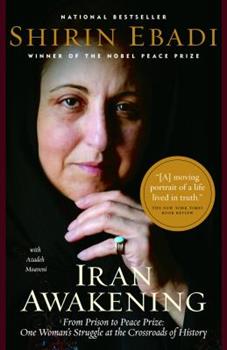
-Iran Awakening: A Memoir of Revolution and Hope, 2006.
-The Golden Cage: Three Brothers, Three Choices, One Destiny, 2011.
-Until We Are Free: My Fight for Human Rights in Iran, 2016. A Persian edition of the book was also published by Baran Publishing in 2018.Articles
-“Children’s Rights and the Family” — a series of articles published in Encyclopaedia Iranica, published by Columbia University.
-“Parental Rights” — an article published in a journal addressing the social implications of biotechnology, published by the French National Centre for Scientific Research (CNRS).
-“Women and Legal Forms of Violence in Iran” — an article on violence published in a journal of the Iran Foundation in Paris.